Glasgow does not need a full heatwave for a neglected bin area to make itself known.
A few warm days can be enough. The smell reaches the entrance, small flies begin appearing around the doorway and somebody responds by spraying air freshener or pouring disinfectant across the floor.
By the following afternoon, the smell is back.
Warm weather is not always the cause of the problem. More often, it exposes residue, damaged bins and cleaning routines that were already falling short.
The Bin Is Not Always the Source
The obvious place to look is inside the bin, but that is often only part of the problem.
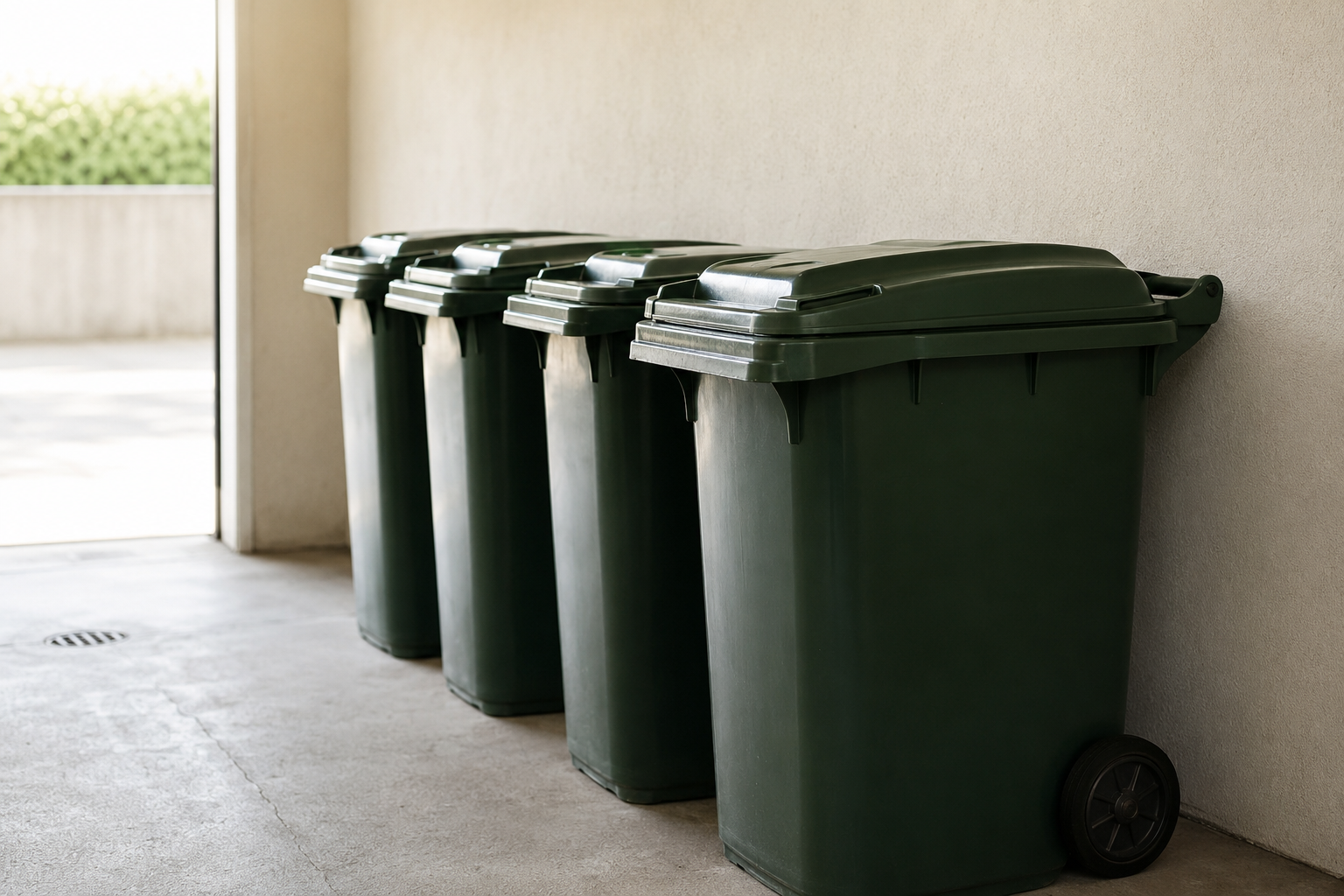
Waste bags split. Liquid runs down the outside of the container and collects underneath it. Food residue becomes trapped around wheels, lid hinges and handles. In communal areas, bins can be pushed back into the same dirty patch after every collection.
Drains are another common source. Pouring water across the floor may make the area look cleaner, but it can also carry food debris into drainage channels where it remains out of sight.
The strongest smell may be coming from the floor beneath the bin, not the waste currently sitting inside it.
A proper inspection should include:
- The floor beneath and behind every container
- Bin lids, handles, hinges and wheels
- Walls where leaking bags have rested
- Drain covers and surrounding channels
- Corners where loose waste collects
- Damaged lids that no longer close properly
Cleaning only the visible surfaces leaves most of the likely causes untouched.
Masking the Smell Does Not Remove It
Strong fragrance is often used as proof that an area has been cleaned.
It proves very little.
Air freshener may cover an odour temporarily, while disinfectant applied directly over grime cannot do the job it was designed to do. Dirt and organic residue need to be physically removed first.
Bleach is also treated as a universal solution. It is not. Using too much can create unpleasant fumes, damage certain surfaces and leave the underlying build-up in place. Cleaning products should always be used at the correct dilution and should never be mixed.
Pressure washing can help in suitable areas, but it needs to be controlled. Pointing a powerful jet at a heavily contaminated floor can scatter residue onto nearby walls, doors and equipment. It can also push solid waste further into a drain.
More force does not automatically mean a better clean.
What a Thorough Bin-Area Clean Involves
The best time to clean a bin store is usually shortly after collection, while the containers are empty or at their lightest.
Loose rubbish should be removed first. Any sharps, unidentified liquids or hazardous waste should be left for someone equipped to handle them safely.
The bins can then be moved so the entire floor is accessible. Dry debris should be collected before water is introduced. This stops paper, food packaging and other material turning into sludge or entering the drainage system.
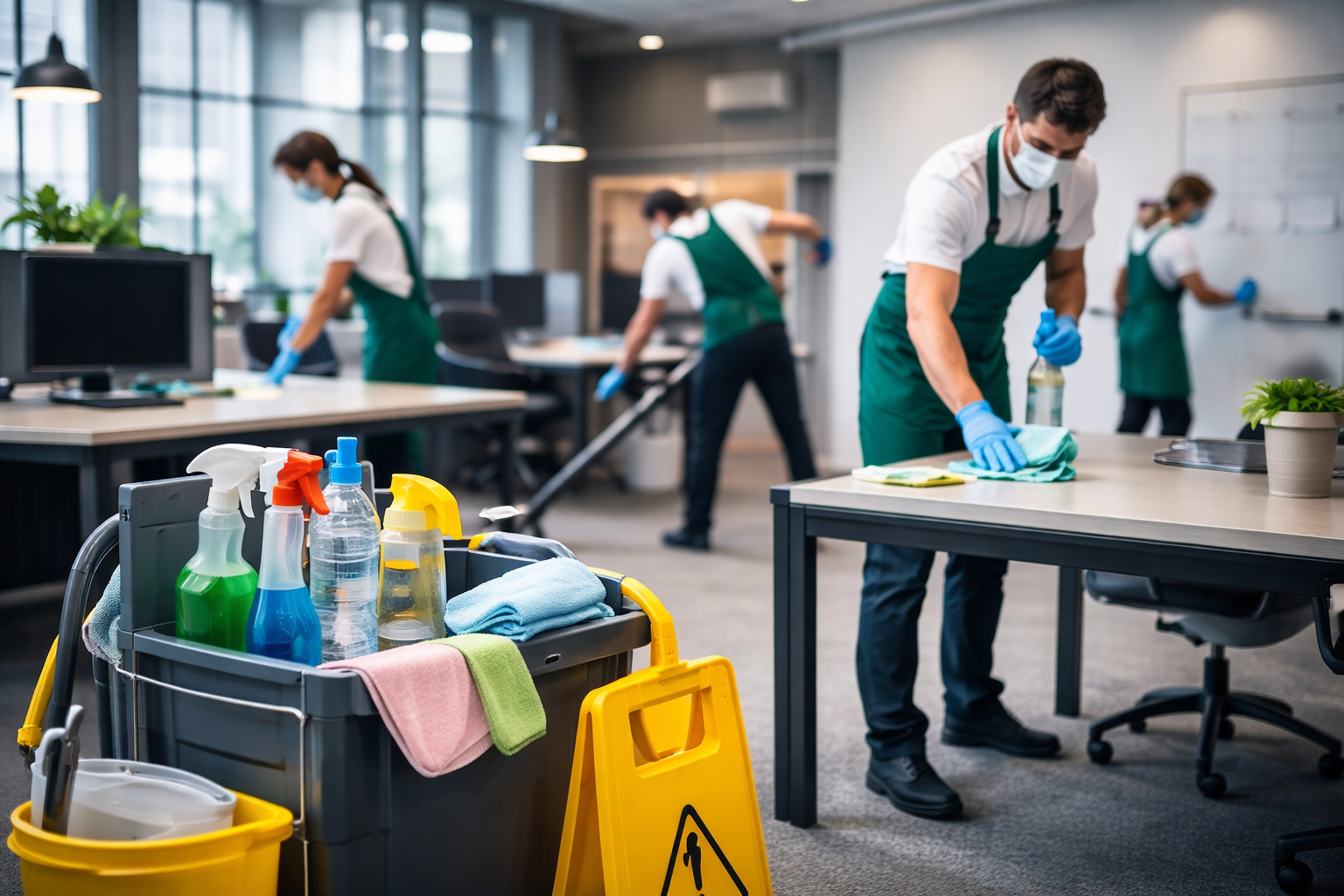
The containers, walls and floor should be washed using a suitable detergent. Particular attention should be given to contact points and hidden surfaces, including the underside of lids and the areas around wheels.
Disinfection may be appropriate after cleaning, depending on the type of waste and the way the area is used. The product instructions, dilution and required contact time matter. Spraying something on and immediately rinsing it away may achieve very little.
The area should then be allowed to drain and dry properly before the bins are returned.
Drying is not an optional finishing touch. Leaving standing water mixed with traces of organic waste can create another hygiene problem almost immediately.
Why the Flies Keep Returning
Killing the visible flies can provide temporary relief, but it does not explain why they are there.
Fly sprays and traps deal mainly with the adults. If food residue, leaking waste or dirty drainage remains, the source has not been removed.
This is why repeated spraying often feels ineffective. New flies continue to appear because the conditions attracting them have not changed.
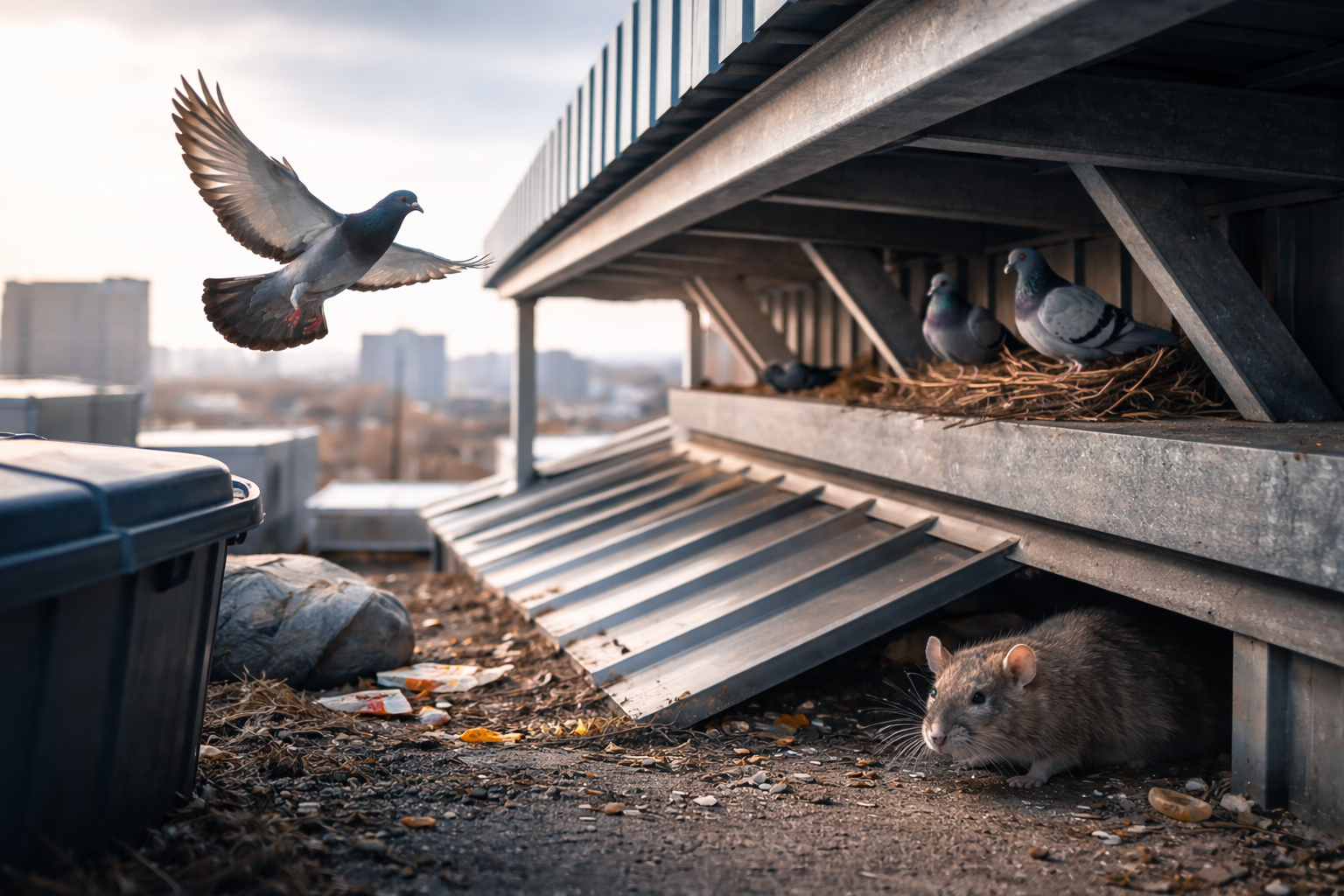
Check for bags that have not been sealed, lids that remain open and residue collecting in warm, sheltered areas. Small flies gathering near a drain can indicate organic build-up inside or around it, even where the surrounding floor looks clean.
The aim should be to remove access to food and breeding material rather than repeatedly treating the insects after they appear.
Communal Bin Stores Have a Different Problem
In a household, one person can usually identify what leaked and clean it quickly.
Shared bin stores are harder to manage.
Residents, tenants, cleaners, waste contractors and property managers may all use the area, but nobody has a complete view of what happens between collections. A damaged bag can leak for days before anyone accepts responsibility for it.
Cleaning records can also be misleading. A floor may be marked as completed even though the bins were never moved. The entrance looks tidy, but the contaminated area remains hidden underneath several heavy containers.
Overflowing bins create another issue. Cleaning cannot compensate for insufficient capacity or irregular collections. If waste is continually being placed on the floor because the containers are full, the collection arrangement needs to be reviewed.
Some problems need better cleaning. Others need better waste management.
Keeping the Area Under Control Between Cleans
A few basic habits make a noticeable difference:
- Seal waste bags before placing them in the bin
- Keep lids fully closed
- Clean leaking liquids as soon as they are found
- Avoid putting food-contaminated packaging into loose recycling
- Report cracked containers and damaged lids
- Arrange deeper cleaning around collection days
Waiting until the smell reaches nearby homes, offices or customers usually means the build-up has already been there for some time.
When Routine Cleaning Is No Longer Enough
A light wash may be sufficient for a well-managed domestic wheelie bin. It is unlikely to resolve a heavily contaminated communal or commercial bin store.
Professional help should be considered where there is persistent odour after the waste has been collected, repeated fly activity, maggots, pest droppings, poor drainage or contamination spread across a large area.
Sharps, bodily fluids, chemicals and unidentified waste also require more controlled handling than an ordinary cleaning routine can provide.
No cleaner can promise that a bin store will remain spotless if bags continue to leak or lids are left open. The cleaning process and the way the area is managed have to support each other.
A Clean Bin Store Should Be Boring
A well-maintained waste area should not need a powerful fragrance to prove it has been cleaned.
There should be no sticky floor, no mystery liquid beneath the bins and no cloud of flies returning a day after treatment.
Warm July weather has a habit of exposing weak cleaning routines. Fixing the source now is far easier than repeatedly masking the smell until the temperature drops.