

If your workplace feels worse in spring, it might not be the outdoors.
Hay fever is usually blamed on pollen, long walks, or time spent outside. But every year, as temperatures rise, many people start noticing something unexpected. The symptoms don’t ease when they step indoors - in fact, they often get worse.
Across offices, gyms, and commercial buildings, the pattern is consistent. Sneezing, irritation, and discomfort increase, even in environments that appear clean. The assumption is that spring air is to blame. In reality, the issue is often already inside the building.
Throughout winter, workplaces are typically sealed off. Windows stay shut, heating systems run constantly, and ventilation is reduced. During that time, dust, debris, and other airborne particles gradually build up without being disturbed.
When spring arrives, everything changes at once. Windows begin to open, air systems circulate more frequently, and pollen enters from outside. What should feel like fresh air instead becomes a trigger, lifting months of settled particles back into circulation.
The result is a mixture of dust, pollen, skin particles, and general debris moving continuously through the same indoor air. Rather than escaping the allergens, people end up breathing a concentrated version of them.
One of the most overlooked contributors to this problem is the ventilation system itself.
Air vents quietly collect dust and contaminants over time. In some cases, this includes pollen particles, mould spores, or grease and residue in environments such as kitchens. These systems are designed to move air efficiently, but when they are not properly maintained, they also distribute whatever has built up inside them.
As airflow increases in spring, those particles don’t remain hidden. They circulate throughout rooms and across entire buildings, often without any obvious source. A single neglected vent can affect a workspace, while multiple vents can impact the air quality of an entire floor.
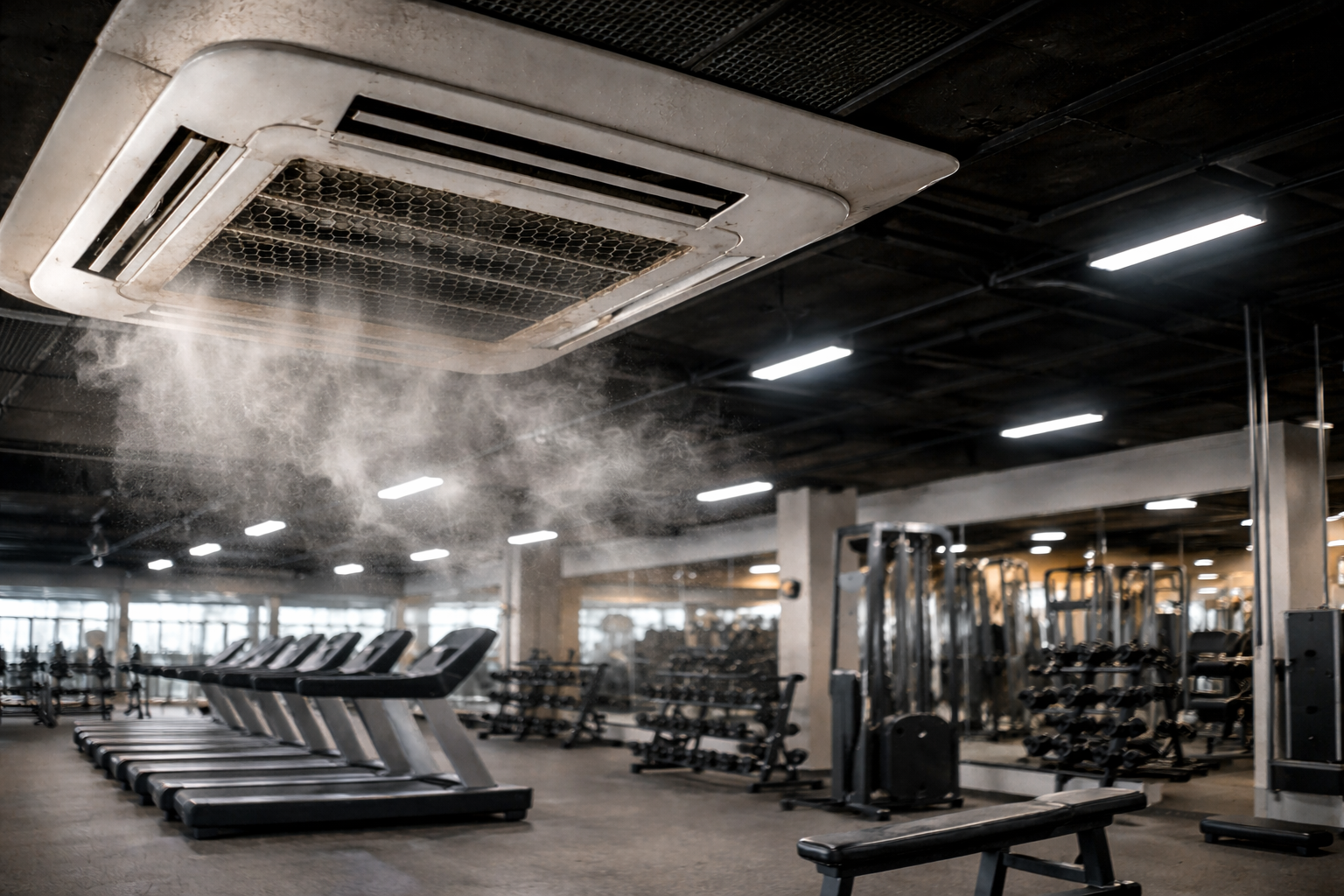
This is why the issue tends to surface in specific types of environments. Offices with limited airflow can trap and recycle irritants, leading to ongoing discomfort. Gyms, where air systems run heavily, can spread dust more quickly across large spaces. Hospitality venues rely on clean ventilation to maintain both hygiene and comfort, while rental and managed properties often inherit whatever has been left behind by previous occupants.
In many cases, the signs are subtle at first. Staff may begin to mention dry air, headaches, or mild irritation. Dust may seem to settle more quickly than usual, or vents may appear slightly discoloured. By the time it becomes noticeable, the buildup has often been there for months.
A common response is to open windows or increase airflow, but this can make the situation worse by introducing more pollen into an already contaminated environment. Surface cleaning and air fresheners offer only temporary relief, addressing what can be seen while leaving the underlying issue untouched.
Improving indoor air quality requires a more direct approach. Ventilation systems need to be inspected and cleaned, high-level dust must be removed, and areas that accumulate debris over time should be properly addressed. Without this, the cycle simply continues each time airflow increases.
For most workplaces, it doesn’t require anything extreme. A thorough clean, attention to ventilation, and a focus on high-traffic areas is often enough to restore a comfortable baseline. The key is dealing with what has built up, rather than just managing the symptoms.
When a workplace feels worse in spring than it did in winter, it’s rarely a coincidence. The season doesn’t create the problem - it reveals it.
And while cleanliness is often judged by appearance, the real impact is in how a space feels to the people using it every day.